The story
A walking root
Diaspora is certainty mixed with possibility, the memory of one origin, bending towards the unfamiliar until something new is born.
There is within diaspora a quiet certainty, the flavours, gestures and silences that shaped us. But this certainty does not calcify. It merges with the new, bends towards the unexpected, and is reshaped through every encounter with the unfamiliar.
The diasporic self is plural, not only the product of what was left behind, but of what is embraced in the present. Someone made of layers. Someone who recognises that margins can also be centres.
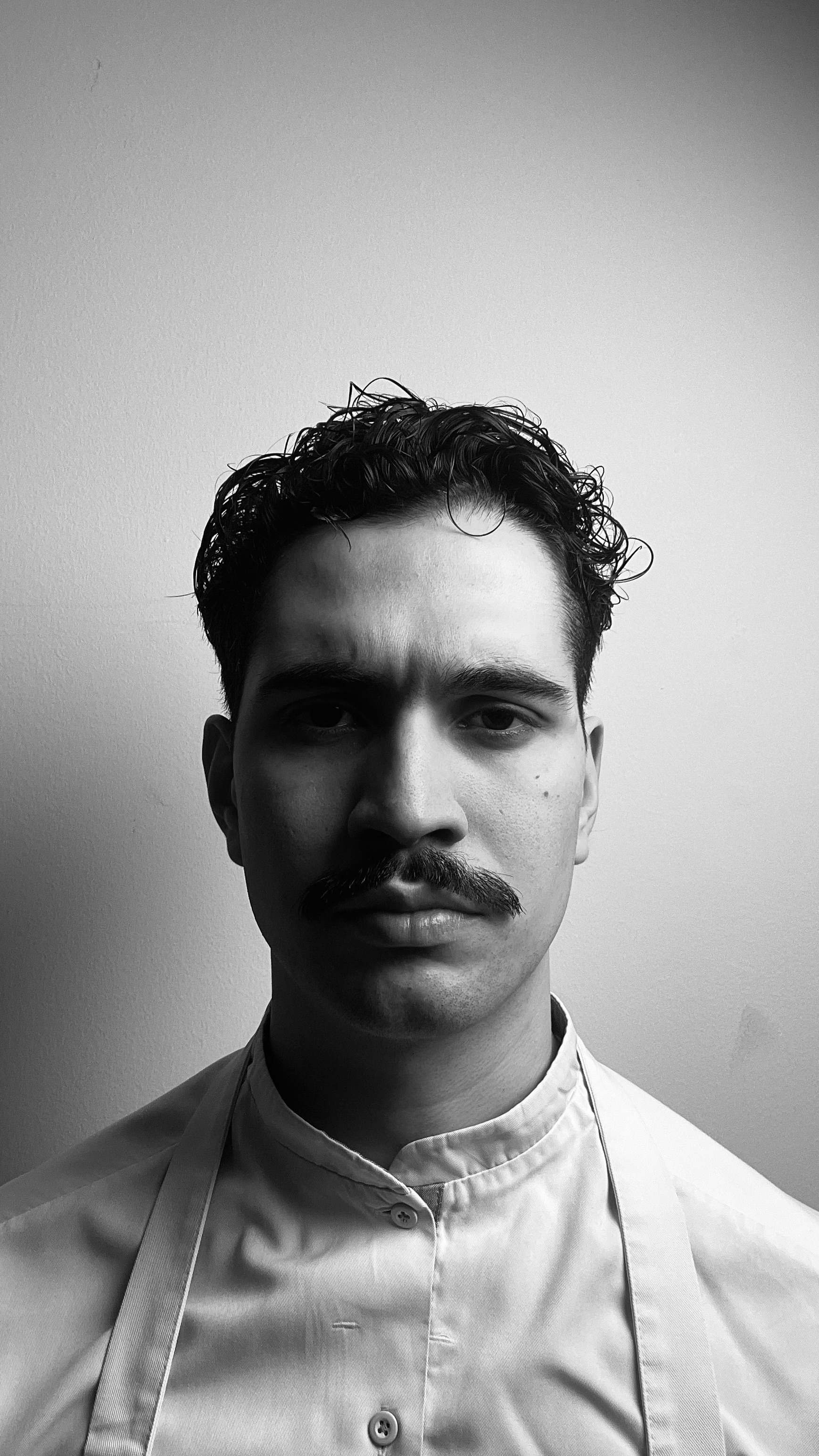
The chef
I came to cooking late, and I chose it with intention, not a hobby, not a job, but a craft and a life, with one quiet certainty beside it: one day I would have a place of my own.
I started at the bottom, a kitchen porter in one of the busiest pubs in Dublin, where I learned the first lesson: this world runs on repetition, discipline and people, and consistency matters more than talent. My final years in Ireland, in Michelin-starred kitchens, taught me what excellence really costs, and a short, seasonal chapter in Rotterdam taught me to listen to ingredients the way you listen to people.
Then Copenhagen, a city I never imagined I would live in, and the one that feels most like home, where I still live today. Here I worked as a creative chef alongside renowned Michelin chefs from around the world, before turning the idea I had carried for years into Diaspora, a place that is truly mine.